Showing posts with label bathroom houseplants. Show all posts

Thursday, February 26, 2015

Snake Plant Care


Common Name: Snake Plant
Scientific Name: Sansevieria species
Lighting: Moderate to Bright Light
Watering: Low to Moderate

Snake Plant
The Snake plant is the ultimate for those without a green thumb. This house plant is one of the hardest to kill. A Snake plant contains heavy, sword-like leaves which shoot up from the base of the dirt. They will grow in a clump like style. Smaller shoots will eventually grow as well. Another common name for this plant is Mother-In-Law's Tongue.

The Snake plant is said to prefer moderate to bright light, however my experience is you can put it anywhere and it will grow. I had mine in an upstairs room with the blinds shut for weeks and it still was beautiful and it is still growing over 4 years later.

This houseplant prefers to be watered once every 7 - 10 days thoroughly, allowing the soil to dry in between waterings. If the foliage begins to droop, you are probably over watering. On the other hand if the foliages begins to wrinkle or bend over you are not providing enough water. This houseplant prefers to be pot bound, so avoid repotting unless the current pot is too small to keep upright.

On a special note, this houseplant is toxic when eaten. It is one of the many poisonous houseplants, so please keep away from pets and children.

Like I said earlier, this plant is really hard to kill, it's one of the easiest houseplants to grow. View my easy to grow houseplants list for other hardy choices.

Tuesday, February 24, 2015

Dieffenbachia (Dumb Cane) FAQ

Problem
My Dieffenbachia plants are tall and falling over. What’s wrong?

Answer
Typically Dumb Cane will get fuller before taller. Your plants may not be receiving enough light and therefore reaching. Move them closer to a window.


Problem
My Dieffenbachia’s leaves are yellowing.

Answer
Yellowing leaves is a fairly common problem, not only with Dumb Cane plants but many houseplants in general. Yellowing leaves can also signal one many potentials problems. Sometimes the yellowing of the foliage is a signal that the plant is not receiving enough light or water. On the opposite side of things, yellowing leaves could simply mean the plant is shedding older foliage.


Problem
My Dieffenbachia foliage is turning yellow and drooping. What’s wrong?

Answer
The yellowing of the leaves and drooping may mean you are over / under watering your plant. Before making that assumption though, check the undersides of the leaves for some type of pests. Sometime spider mites can cause these symptoms. If you do see tiny red spots or some other sort of houseplant pest, spray the entire plant twice per day with a soapy dishwater detergent.


Problem
Can Dieffenbachia be propagated?

Answer
Yes. if your Dumb Cane plant has fallen over or continues to fall over, you can split it easily. This houseplant easily roots itself by simply placing it in water until iiiDieffenbachia and stuck it in water with rocks on the bottom. The plant then rooted and was ready to go.


Problem
My Dumb Cane plants has grown “pods”. What are they?

Answer
The pods are Dieffenbachia’s flower. They look almost like a bean. Dumb Cane’s typically do not flower often. I personally never had mine flower (unfortunately), however readers have shared their experiences. For additional information please see http://plantsarethestrangestpeople.blogspot.com/2008/11/random-plant-event-special.html


Problem
The foliage on my Dumb Cane plant is no longer a beautiful green and it has lost its white centers. What can I do to get the markings back on my Dieffenbachia?

Answer
Typically houseplants will lose some of their color luster because they are not receiving enough light. Try moving the plant to an area closer to a window that receives more light each day.

Looking for more advice and tips on caring for this houseplant? Be sure to read the complete Dieffenbachia (Dumb Cane) Plant Care Guide.


Prayer Plants Care Tips

Common Name: Prayer Plant, Ten Commandments
Scientific Name: Maranta leuconeura
Lighting: Moderate to Low
Watering: Moderate to Heavy


The Prayer plant is really a quite amazing plant. Its foliage is mainly a dark green with red variations of veins running through them. The amazing part of the Prayer plant is that at night, the leaves fold up. Just like it's praying! This plant is available in many varieties including Herringbone and Rabbits Tracks. The main foliage colors vary depending on the variety. This plant is a nice small, compact houseplant, perfect for windowsills! It adapts very well to indoor temperatures, making it a great addition to your room.


Prayer plants prefer moderate to low indirect light levels. If the leaves on your plant begin to curl and turn brown, your plant is receiving too much light. Providing this plant with too much direct sunlight can burn the foliage.


Prayer plants require moist but not soggy soil. This houseplant also is one of the few houseplants that does not like its soil to dry out between watering, so try to keep the soil consistently moist at all times.


The biggest need for this houseplant is humidity. It requires high humidity levels to flourish, so a daily misting will go far. If the tips of the foliage begin to brown your plant may not be getting the humidity it needs. By providing high humidity levels, you help in ensuring beautiful flowers bloom. This plant is also very temperamental when it comes to temperature changes. It prefers a range of 65 to 80 degrees, however it does not like fluctuations in temperature. Do keep it away from drafts.


Please share your care tips and questions!!


Heart-Leaf Philodendron Plant Care

Common Name: Heart-Leaf Philodendron
Scientific Name: Philodendron scandens oxycardium
Lighting: Moderate
Watering: Moderate to Low


The Heart-leaf Philodendron is a great vining houseplant. I have had mine for over 6 years now and as you can see it has gotten quite large. Keep in mind, I have given this plant many "haircuts" as I call them and yet it is still healthy and big. The Heart-leaf Philodendron is characterized by heart shaped leaves growing off of vines from the plant. Leaves can be anywhere from 2 to 6 inches in diameter. The Philodendron requires little care but not none. This plant requires pruning care to keep its full appearance. One caution to be aware of, those with children. Some Philodendrons are toxic if eater, so be sure to keep them away from your pets and children.


Philodendrons prefer moderate to low light. If new foliage begins to develop smaller or the distance between leaves is larger in distance, your plant is most likely not receiving enough light. However, please be careful. Direct sunlight can burn the foliage.


This houseplant requires moderate to low water requirements. Try and keep the soil moist but do not allow it to dry out completely in between watering. If the foliage begins to turn yellow, you are probably over watering the plant. On the other hand if the foliage begins to turn brown you are not providing the plant with enough water. The Philodendron does not seem to mind lower humidity levels, however if you give a daily dose of misting to it, the plant will provide you with an even more beautiful appearance. Be sure to also keep the foliage clear of dust by washing regularly.


Many varieties of Philodendrons like to vine. As you can see from my pictures, vines can grow quite long, so trimming the plant back will not harm it. Trimming will help you shape this plant to the size you have for it. If you are looking to keep your plants current shape, be sure to trim back new growth. I have used small pins to hold my vines into place however some varieties of Philodendrons will actually product small roots, which will cling to your wall.


This houseplant provides you with the benefit of creating even more Philodendrons as you wish. Propagating is extremely easy. Simply cut off a vine that is long enough for you to place the end in water. Keep the cut stem in water for a few weeks and before you know it, your stem has produced a large amount of roots. Simply plant your new roots and your done. I tend to give my large philodendron haircuts a couple times a year. When I do, I place all my stems in a vase with water so they can root and I have a whole new Philodendron. The picture of the plant along the glass block wall is from one of my large plants haircuts.


This houseplant is toxic when eaten, so please keep out of reach of children and animals. It is one of the many poisonous houseplants you may have in your home.


Overall, this houseplant is one of my all time favorites. It's on my list of easy to grow houseplants! Plus they can add so much drama and character to any room. Best of all, you can have as many philodendrons as you want for little time and money!!!


Dieffenbachia (Dumb Cane) Plant Care


Common Name: Dieffenbachia (Dumb Cane)
Scientific Name: Dieffenbachia Species
Lighting: Moderate to Low
Watering: Moderate to Heavy


The Dieffenbachia (Dumb Cane) is an extremely common houseplant. It is also one of the easiest to care for. The foliage entails elliptical shaped leaves however the colors can vary greatly between type. Some foliage may be all green, cream with green borders or a mix between the two.


Dieffenbachia requires moist soil, so water frequently. You may also place a tray under the pot with water in it to help in keeping the plants soil moist at all times. This houseplant also requires high humidity levels so misting daily will also help keep the Dumb Cane healthy.


This houseplant prefers to be within 5 to 8 feet of a window, but will survive lower light levels. However please caution against placing the plant anywhere near drafty areas. The Dieffenbachia also prefers temperatures above 60 F.


The Dieffenbachia contains a toxic sap thus giving the name Dumb Cane, so please keep out of reach of children or animals that may try and eat the plant. It is one of the many poisonous houseplants you may have in your home.


Common varieties of the Dieffenbachia include the Exotica Compacta, Australian, Tropic Marianne, Paradise, Camille and Tropic Snow.


Overall, Dieffenbachia is fairly simple to care for. Please view my top 10 easy to grow houseplants for other non-time consuming options.

Chinese Evergreen Care


Common Name: Chinese Evergreen
Scientific Name: Aglaonemas
Lighting: Low to Moderate
Water: Moderate


Chinese Evergreens are durable, dramatic houseplants. They will adapt to a variety of settings within their limits. Chinese Evergreens are slow growing in nature, however when taken care of can last for decades, literally! This houseplant is characterize by large foliage in a variety of silver green and dark green colors as well as variegated. A lot of the more light green / dark green varieties remind me of a Dieffenbachia just more full. Chinese Evergreens, Peace Lily's and Dieffenbachia all belong to the same family, thus the resemblance.


Chinese Evergreens are available in many varieties with new hybrids being developed as we speak. Below is a list of the most common names I was able to find:
Silver Queen
White Rajah
Green Lady
Silver Frost
Maria
Black Lance
Green Majesty
Manilla Pride
Jubilee
And lots more!!


Chinese Evergreens prefer moderate to low light levels. They usually do not do well at all in direct sunlight, so beware. A north facing window is usually a safe area to place this houseplant in. This houseplant is also very, very, very touchy to drafts and cold temperatures. Keep temperatures above 60 degrees for best results. Dropping below 55 degrees can be lethal to Aglaonemas. If brown spots begin to appear on the foliage, it may be too cold for the plant.


Aglaonemas do best with moderate watering. Right in the middle! Don't let the soil become soggy, but at the same time, do not allow the soil to dry out in-between watering. If the bottom leaves begin to yellow and fall off, chances are you are under watering the plant.


Overall, Aglaonemas are very nice houseplants to have. Fairly easy to grow, usually not susceptible to pests and is a long lasting variety allowing you to enjoy its beauty for many years to come.


Monday, February 23, 2015

Heart Shaped Philodendron FAQ

Problem
My philodendron has become nothing more than long vines with very few leaves. What can I do?

Answer
Philodendron’s need what I like to call “hair cuts” to remain full. If you don’t want to trim your whole plant, do a handful of vines first versus the whole thing. Clip the vines back to a couple of inches from the beginning. Take your clippings and trim them down so they are long enough to fit into a vase filled with water. Continue to provide the clippings with water and within a month or so, your philodendron clippings should begin forming roots. After a good set of roots have formed, you can now replant your clippings with the original plant.


Problem
My heart-leaf philodendron leaves have developed a white fuzzy substance and have begun dying. I wipe the fuzzy substance off, but it comes right back. The fuzz even shows up on new leaves while they are developing.

Answer
Your Philodendron has gotten infested with mealy bugs or a type of mold. First thing you need to do is move it away from other plants so the infestation don't spread. Try removing the white fuzz with rubbing alcohol on a cotton swab. After a day or so, spray the entire plant with water, like a mist.  Do this for a couple days. If the rubbing alcohol doesn't work, go to your local garden center and try a insecticidal soap.


Problem
My Philodendron plant looks beautiful and healthy, however it won’t grow any larger. What am I doing wrong?

Answer
Many times when a plant looks otherwise healthy, it typically signals a lighting problem. The plant is receiving enough light to remain healthy but not enough to flourish. Try providing the plant with more light. Not necessarily direct light. Move it closer to a window or try a grow light a distance away from the plant for a month and monitor what happens. If you see a large amount of improvement leave the plant within the new light arrangement. If you see some improvement but not much, give the Philodendron a little more light until you find the happy medium.


Problem
I’ve had my Philodendron clippings in water for over 5 weeks and still no roots. How long do I wait? Will it hurt the clippings with roots to sit in the water this long?

Answer
Be patient! Each clipping will act differently. Sometimes they may root within 2 - 3 weeks, sometimes longer. Those that do root faster than the rest will be just fine within the water. I actually have a small vase in which I have 2 clippings that have been in water for over 4 years now.


Problem
When should I repot my heart-leafed Philodendron?

Answer
I’m not a plant expert on paper, but from my experience, you won’t need to repot your Philodendron often at all. These houseplants like to be root bound. I’ve had mine for 10 years now. I’ve repotted it once and that was just within the last year. If roots start appearing on the top of the soil, you may want to add more dirt to the top of the pot. If adding dirt is not an option than go ahead and repot into a bigger container.


Problem
How often should I water my Philodendron?

Answer
This houseplant doesn’t require heavy water. Typically if you water once every 1 - 2 weeks your Philodendron will grow wonderfully.


Problem
My plant has become infested with little black bugs. How do I get rid of them?

Answer
Spray the plant with a soapy dishwater mix twice a day for one week. If the bugs are still present, visit your local garden center to find an insecticide that will be more potent. I always like to try the dishwater mist first. It’s been quite effective for getting rid of pests on all my houseplants.

Be sure to read my full guide to Heart Shaped Philodendron Plant Care.


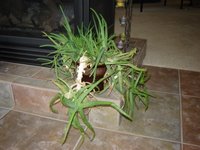
Aloe Vera Plant FAQ

Aloe Vera plant

Problem:
How much should I water my Aloe plant?

Solution:
Aloe plants require low water levels, so water the plant once every 2 weeks or longer. Typically I wait 3 weeks to a month in between watering. Allow the soil to dry completely in between watering. And as usual, be sure your plants soil has proper drainage.

Problem:
Are Aloe Vera Plants Poisonous?

Solution:
Various sources state the varieties of the Aloe Vera plant are poisonous if ingested. Aloe is safe to use on sunburns, warts, eczema and other topical uses, but ingested state poisonous. Below are the 2 sources I used:

North Carolina State University
Aloe - Wikipedia

Problem:
Do Aloe Vera plants flower / bloom?

Solution:
My Aloe plant has never bloomed, however multiple readers have shared stories that their very old Aloe plants have bloomed. A slender shoot varying from 12 to 18 inches will small buds is how it has been described. You can also go to Google Images and search "Aloe flower" to see pictures. Do put your Aloe Vera plant on a towel or something while it is blooming. They can drip sap.

Problem:
Some of the stalks have shriveled up and died. Can I remove them?

Solution:
Yes. You can cut the dead foliage off, as close to the main center stalk as possible without harming the plant. It will actually help the plant, as it will no longer waste energy trying to save a dead stalk. The shriveled up foliage could be a sign that you are under watering the plant.

Problem:
The leaves on my Aloe Vera plant seem droopy.

Solution:
This is most likely a watering issue. You may be providing the plant with too little or too much water. Aim to water once every 2 weeks or more. I would water once a month, giving a good soaking with proper soil drainage.


Miscellaneous Tip

When watering, water directly to the soil and try to prevent water from getting on the foliage. Multiple readers have witnessed that when water gets onto the lower leaves in particular, they brown.


Featured Comments on Aloe Vera Plants


I got my Aloe's from my aunts garden in Tucson, Az. Every summer I put them outside and the leaves turn a nice light rosy brown. When I bring them back in in the fall they return to green. I have waited to bring them in until later in the fall when the night temperatures have been in the upper 30's (I live in Minnesota) and they have been just fine. They all flower once every year with a long stem that has small orange trumpet shaped flowers on it. I have not watered in the winter for up to two months and they do fine.

If the leaves start to shrivel they need water. They will come back just fine. They like being crowded, that's the way they grow outside. They don't mind being overcrowded. Each plant will just grow taller (into a stalk) and the "babies" will find their way up between the established plants. Any of the "babies" can be repotted at any time. I've even had "babies" grow out of the overcrowded established plant. This is, by far, the easiest plant, along with Mother-in-laws tongue (Snake plant), I have ever had, to care for.
Anonymous Post


Hello everyone,
I want to share some of my lifetime experiences with Aloe Vera; I grew up in a tropical Country where it grows wild. Notice that there are about 400 varieties of Aloe, and "Vera" is the one I'm going to refer to. Go to: http://en.wikipedia.org/wiki/Aloe_vera and you will see on the right how it looks like; in the US you can find it at the grocery stores everywhere and I call it 'the miracle plant'.
We ingest it as a body cleanser, use it for burns, wounds (small and big), mild infections, bug bites, as suppositories for hemorrhoids and minor vaginal infections (a great way to have it available when needed is by peeling the Aloe Vera carefully with a sharp knife, cutting long strings lengthwise, wrapping them individually with aluminum foil and freezing them in a sealed plastic bag, so when you need some, just brake a piece); Aloe Vera is a great for cuts and burns and when its flesh is applied directly on the wound and then covered with a gauze, it regenerates the skin and you don't get scars!

Aloe Vera loves sunlight; humidity and cold weather are its worst enemies; I live in GA, so I keep it indoors close to a sunny window during winter and either keep it there all year long or take it out for Summer time. I bring it in when it rains a lot, because it will rot in no time. When I accidentally bump into a leaf and it starts to get saggy or looks ugly, I simply cut it from the base with a sharp knife and proceed to peel it for future use.
Anonymous Post


Be sure to also read the complete Aloe Vera Plant Care post for detailed information on how to care for this houseplant.


Peace Lily Care


Common Name: Peace Lily, Closet Plant
Scientific Name: Spathiphyllum
Lighting: Bright Light
Water: Heavy


Long elongated green foliage with white half shaped blooms characterizes the Peace Lily houseplant. The Peace Lily is one of the most popular houseplants. The Peace Lily (Closet Plant) is one of my top 10 easy to grow houseplants.


Thriving in lower lighted areas make this plant work almost anywhere. Try to keep it within 5 to 8 feet of a window for best results. Do not place your plant in direct sun. Direct sunlight can damage the Peace Lily's foliage. If the leaves begin to yellow, it may mean it is receiving too much sunlight. Move it to a less lighted area.


The main care requirement for your Peace Lily is water. This plant requires heavy watering, but you must allow the soil to dry out in-between watering to a point as well. This houseplant will let you know when it needs water. The leaves will begin to droop. Allowing the foliage to droop slightly in-between watering has turned out to be successful for me. However, do not let it droop severely. Once the plant is watered the foliage will spring back up. If you allowed it to dry out too much, some of the lower leaves may yellow and need to be removed.


This plant also loves higher humidity levels, so providing it with a nice misting a couple times a week will help the plant remain beautifully healthy.


Please keep pets and children away from this plant. It is one of many poisonous houseplants.


Spider Plant Care

Common Name: Spider Plant
Scientific Name: Chlorophytum comosum
Lighting: Moderate
Watering: Low


The Spider Plant is characterized by its long shoots of thin foliage with off shoots at the ends of many of the leaves. The Spider plant's foliage is commonly known to be variegated with a white stripe, however some may have the white stripe to the outside or the foliage may be entirely green. The Spider Plant is one of my top easy to grow houseplants as well as one of the easiest to reproduce.


The Spider Plant requires only light watering. Allow the soil to dry completely in between waterings. You only need to water the spider plant once every two weeks. If the foliage begins to show black tips or a yellow halo, you are probably over watering the plant. If the foliage begins to drop, the plant is ready for a drink. If the foliage begins to brown, try watering with distilled water. The Spider Plant has been known to have problems if there are chemicals in the water.


Spider Plants prefer natural light, but do not place them in direct sunlight. If the leaves begin turning brown, try moving the plant out of the direct light. If the plant is kept within 5 to 8 feet of a window it should grow fine.


The off shoots can be removed and placed in soil or water which will then grow into its own plant in very little time. It is actually good to remove these off shoots from the main plant. Too many off shoots can cause the main plant to strain.


Pests and mites are not a problem with this houseplant. I personally have never had any problems with pests on my spider plants, however if they should arrive simply spray a soapy water mixture over the plants a couple of times a day.


Please tell others what experiences you've had with this plant.


African Violet FAQ

Problem:
There is white mold or fungus growing on top of the soil of my African Violet plants.

Solution:
The mold or fungus is typically due to over watering or the soil is not draining properly. Use soil specifically for African Violets. Water less frequently or less heavily to prevent the soil from becoming water logged.


Problem:
I want to replant my African Violet however it doesn't look healthy. Should I wait?

Solution:
Yes. Typically, replanting will put the plant in a slight state of shock, so transplanting when the plant isn't healthy may actually hurt the plant. Wait until the plant is in a healthful state before repotting.


Problem:
Your African Violet has some type of pest. How do I get rid of them?

Solution:
There are multiple ways. You can spray them with a soapy dishwater mixture twice a day for a couple days. Another method a reader shared was a mixture of rubbing alcohol and water. However with the alcohol mixture, it killed the crown of the plant. But, it then grew many new crowns, when can't be left to grow for a few months then separated. You can also purchase an insecticide at any local garden center. 


Problem:
What is the right way to water African Violets?

Solution:
African Violets prefer moderate water levels, which typically means once a week when the plant dries out. In terms of how much depends really on your plant. The biggest thing I've learned with houseplant is that you need to feel it out. As one reader commented, she drenches her African Violet and then lets it dry out completely. That strategy has worked very well for her. I, myself seem to have to not drench it, but give it a good soaking. Do test and see what will work best for your plant.

One thing is for sure; make sure you are allowing proper drainage of the water. This is true for all houseplants.


Problem:
How do I propagate African Violets?

Solution:
These houseplants are extremely easy to propagate. Almost too easy. Take any leaf with stem and place in soil. Water thoroughly and you should be good to go!


Miscellaneous Tips:

African Violets don't like to be moved, so find them a great location and keep them there. If you do need to move them, be ready for a little backlash. The plants will spring back, but may go through a little shock period and take a little longer to bloom again.

Be sure to pinch off dead blossoms to help keep your African Violet keep blooming for many years.

Be sure to also read the complete African Violets Care post for detailed information on how to care for this houseplant.

Aloe Vera Plant Care

Aloe Vera plant

Common Name: Aloe Vera
Scientific Name: Aloe vera
Lighting: Moderate to Bright
Water: Low


Thick, light-green succulent leaves characterize the Aloe Vera plant. The Aloe plant is one of the easiest houseplants to care for. The Aloe Vera is a great plant to have around. When the leaves are broken open a gel is released that works wonders on sunburns, cuts and even bug bites.


The Aloe Vera's care needs are just that of a cactus. It thrives in bright light so keep it within 5 feet of a east or west facing window. This houseplant also just like the cactus tolerates very infrequent waterings. You will only need to water this plant once every 2 weeks. I have even gone three weeks without any problems.


This houseplant can grow very big, very fast. If the plant begins to outgrow its pot, like it probably will, you may simply transplant sections and place it in another pot with dirt. I have done this multiple times. The plant also does not appear to be very picky about its soil type either. My biggest aloe (pictured) is growing in plain dirt from the yard. As you can see with my aloe pictured, these plants can spread very quickly. Mine needs some serious downsizing.


Aloe Vera plants are very easy to care for. They withstand quite a bit in my opinions. Please take a minute and view my list of easy to grow houseplants for other plants that are great for the busy person.


The sap of Aloe plants works great for sunburns and as treatment for other topical problems. However, from what I have found, certain varieties are poisonous if eaten, thus I have it listed on my poisonous houseplants list. So just to be safe, please keep these plants up and away from your pets and children.


Please add your comments about caring for this plant.


African Violet Plant Care


Common Name: African Violet
Scientific Name: Saintpaulia ionantha
Lighting: Moderate to Bright
Watering: Moderate


The African Violet is an extremely common houseplant. The African Violet is characterized by low-growing, heart shaped hairy leafed foliage remaining fairly oval in overall shape. African Violets are available in many varieties with flowers ranging from pink to blue to the traditional violet. Foliage can range from dark green to variegated.


African Violets prefer moderate to bright indirect sunlight. Keep them near an east or west window for best results. Aim to provide your African Violet with at least 8 hours of sunlight a day. If your African Violets foliage begins to yellow and the plant seems to be reaching, it is probably not getting enough light. On the reverse side, if the foliage begins to have brown spots or the foliage curls, the plant may be receiving too much light.


African Violets prefer their soil semi-moist. Allow the soil to slightly dry out in-between watering for best results. One trick with watering African Violets is you want to avoid getting water on the foliage. Water either from the bottom, such as a water tray in which the water can be seeped up or directly on the dirt. Either way the goal is to avoid getting the foliage wet. If water does get on the leaves it will usually leave white spots. Be sure to try and use room temperature or warm water instead of cold.


African Violets prefer higher humidity levels and usually do well in temperatures between 62° and 75°. Try not to let the temperature drop below 60°. Also, as with most houseplants, keep them away from vents and entry ways.


This houseplant also prefers its own special soil mix. Most garden centers have African Violet soil mixtures already pre-packaged for you. This houseplant also prefers some root for its roots, so make sure it has enough space to prevent becoming root bound.


As like their soil, there are also special fertilizer and plant food mixtures for this plant. I have always just used my normal Miracle Gro houseplant food but that's just me.


To encourage new blooms, pinch off dead blossoms and their stems.


This houseplant is known to have some pest problems. Mealybugs and red spiders are the most common pests. If you begin to see a problem on your plant, I would suggest using specific insecticides labeled for African Violets. I personally haven’t had a pest problem with this plant so I cannot say if my homemade soapy dishwater mixture works or not. If you have solutions, please post comments below and share with other readers.


A collection of comments and tips have been combined over on the African Violets FAQ page.


Happy Growing!!!

Top Bathroom Plants

Bathrooms offer challenges in terms of what houseplants to put in the area. However, bathrooms also offer great opportunities for houseplants that may not do well in other areas of your home. For example, a bathroom usually will have higher humidity levels from showers and baths; therefore a houseplant that requires higher humidity levels will do very well in a bathroom without you having to mist it.


In order to choose the best houseplant for your bathroom you have to consider the environment your bathroom offers. Most importantly is lighting. If your bathroom has low light levels, which many do, be sure to choose a plant with low light requirements. Like mentioned above, many houseplants require high humidity levels, therefore do not choose a plant that does not like high humidity levels.


Listed below is my list of the best houseplants for bathroom environments:
Chinese Evergreen
Bamboo Varieties
Spider Plants
African Violets
Snake Plants
Aloe Vera Plants
Boston Fern
Peace Lily
Dieffenbachia
Pothos
Heart-Leaf Philodendrons
Prayer Plants


Boston Fern Care

Common Name: Boston Fern
Scientific Name: Nephrolepis exaltata 'Bostoniensis'
Lighting: Moderate to Bright
Watering: Moderate to Heavy


Ferns are popular houseplants, however the Boston Fern is one of the most common ferns you see in people's homes. Arching long green fronds forming an elegant mound characterizes this houseplant. Boston Ferns can reach up to 5 feet so keep that in mind when looking to repot.


Boston Ferns prefer medium light levels, so try and keep your plant within 4 to 7 feet of a sunny window providing indirect sunlight to the houseplant. If the foliage begins to wither, the plant is probably not receiving enough light. You may remove the dead fronds as needed.


Boston Ferns also require moderate to heavy watering. Keep the soil moist at all times with exception to the winter months. In the winter, water your fern once the soil feels dry to touch, however do not let the soil dry out too much. Boston Ferns have high humidity requirements so give your plant a misting a couple times a week to help fulfill its requirements. If the foliage begins to fade in color, chances are the plant is not receiving enough water.


Ferns prefer normal temperatures. 60 – 75 during the day and slightly cooler at night. Keep these plants away from drafts and registers as well. It's also a good idea to provide your plant with some houseplant food. Once a month use a water-soluble houseplant food except in fall and winter months.